
Back pain affects millions of people every year, and if you’re experiencing it right now, you’re not alone. Here in Winter Garden, FL, we see patients at Vertebre Chiropractic Studio every day who are struggling to understand why their back hurts and what they can do about it. The truth is, not all back pain is the same. Different types of back pain have different causes, different characteristics, and different approaches to care. Understanding what type of back pain you’re experiencing is the first step toward finding relief and getting back to the activities you love. In this article, we’ll walk through five common types of back pain, explain what causes them, and help you recognize the signs so you can make informed decisions about your health.
What are the main types of back pain? Back pain generally falls into categories based on location (upper, middle, or lower back), duration (acute or chronic), and underlying cause (mechanical, inflammatory, or nerve-related). The five most common types include lower back pain, upper back pain, sciatica, muscle strain-related pain, and disc-related pain. Each type has distinct characteristics and triggers that can help identify the best approach to care.
Table of Contents
- Type 1: Lower Back Pain (Lumbar Pain)
- Type 2: Upper Back Pain (Thoracic Pain)
- Type 3: Sciatica and Radiating Leg Pain
- Type 4: Muscle Strain and Soft Tissue Pain
- Type 5: Disc-Related Pain
- How Chiropractic Care Helps Different Types of Back Pain
- Practical Tips for Managing Back Pain at Home
- When to See a Chiropractor
- Comparison of Back Pain Types
- Myths vs. Facts About Back Pain
- Final Thoughts
Type 1: Lower Back Pain (Lumbar Pain)
Lower back pain is by far the most common type of back pain we see at Vertebre Chiropractic Studio. The lumbar region of your spine carries most of your body’s weight and is responsible for a tremendous amount of movement and flexibility. This combination of heavy load and high mobility makes it vulnerable to injury and wear over time.
Lower back pain can feel like a dull ache, sharp stabbing sensation, or stiffness that limits your ability to bend or twist. Many patients describe difficulty getting out of bed in the morning, trouble standing up straight after sitting, or pain that worsens with certain movements. The pain typically stays localized in the lower back area, though it can sometimes spread into the buttocks or hips.
Common Causes of Lower Back Pain
Several factors contribute to lower back pain. Poor posture while sitting or standing puts excessive stress on the lumbar vertebrae and surrounding muscles. Many people in Winter Garden spend hours sitting at desks or in their cars, which can weaken core muscles and create imbalances that strain the lower back.
Repetitive bending, lifting, or twisting movements can gradually wear down the structures in your lower back. Even seemingly harmless activities like gardening, playing with your kids, or carrying groceries can trigger pain if your body isn’t properly conditioned or if you use poor body mechanics.
Age-related changes also play a role. As we get older, the discs between our vertebrae naturally lose some of their water content and shock-absorbing ability. The joints in the spine can develop osteoarthritis, and the ligaments may become less flexible. These changes don’t automatically mean you’ll have pain, but they can make the lower back more susceptible to injury.
Excess body weight increases the mechanical load on your lumbar spine. Research indicates that maintaining a healthy weight can significantly reduce the risk of developing chronic lower back pain. Weak core muscles and tight hip flexors from prolonged sitting create additional strain on the lower back structures.
Type 2: Upper Back Pain (Thoracic Pain)
Upper back pain affects the thoracic region of your spine, which runs from the base of your neck to the bottom of your rib cage. This area is naturally more stable than the lower back because it’s connected to your rib cage, but that doesn’t make it immune to pain and dysfunction.
People experiencing upper back pain often describe it as a burning sensation between the shoulder blades, tightness across the upper back, or a feeling of stiffness that makes it hard to take a deep breath. Some patients feel like they have a knot or constant tension in their upper back muscles.
Common Causes of Upper Back Pain
The most frequent cause of upper back pain we see at our Winter Garden practice is poor posture, particularly forward head posture and rounded shoulders. When you spend hours looking at a computer screen, phone, or tablet, your head tends to drift forward. For every inch your head moves forward from its ideal position, it can add up to 10 pounds of additional force on your neck and upper back muscles.
This sustained poor posture creates muscle imbalances. The chest muscles become tight and shortened while the upper back muscles become overstretched and weak. Over time, this imbalance leads to pain, stiffness, and even headaches.
Injuries from car accidents, falls, or sports activities can also cause upper back pain. The sudden impact can strain or sprain the muscles, ligaments, and joints in the thoracic spine. Stress and emotional tension tend to manifest physically in the upper back and neck area, causing muscle tightness and discomfort.
Less commonly, upper back pain can result from thoracic disc problems, rib dysfunction, or referred pain from internal organs. While these causes are less frequent, they’re important to rule out during a thorough examination.
Type 3: Sciatica and Radiating Leg Pain
Sciatica is a specific type of back pain characterized by symptoms that radiate down one or both legs along the path of the sciatic nerve. The sciatic nerve is the largest nerve in your body, running from your lower back through your hips and buttocks and down each leg.
Sciatica typically causes sharp, shooting pain that travels from the lower back or buttock down the back of the thigh and into the calf or foot. Many patients describe it as an electric shock sensation. Along with pain, you might experience numbness, tingling, or weakness in the affected leg. The symptoms usually affect only one side of the body.
Common Causes of Sciatica
The most common cause of sciatica is compression or irritation of the nerve roots in the lower spine. This can happen when a herniated or bulging disc presses against the nerve root. When the soft inner material of a spinal disc pushes through its outer layer, it can impinge on nearby nerve structures.
Spinal stenosis, a narrowing of the spaces in your spine, can also compress the sciatic nerve. This condition often develops gradually with age as bone spurs, thickened ligaments, or bulging discs reduce the space available for nerves.
Piriformis syndrome occurs when the piriformis muscle, located deep in the buttock, becomes tight or spasms and irritates the sciatic nerve that runs beneath or through it. This is sometimes called “pseudo-sciatica” because it mimics true sciatic nerve compression but originates from muscle dysfunction rather than spinal issues.
Degenerative disc disease, spondylolisthesis (when one vertebra slips forward over another), and even pregnancy can contribute to sciatic symptoms. At Vertebre Chiropractic Studio, we take time to identify the specific cause of your sciatic pain so we can address it appropriately.
Type 4: Muscle Strain and Soft Tissue Pain
Muscle strains and soft tissue injuries are extremely common causes of back pain. These injuries involve the muscles, tendons, or ligaments that support your spine rather than the spinal structures themselves.
A muscle strain typically causes localized pain that worsens with movement, particularly bending, twisting, or lifting. The affected area may feel tender to touch, and you might notice swelling or muscle spasms. The pain usually comes on suddenly after a specific incident, though it can also develop gradually from overuse.
Common Causes of Muscle Strains
Acute muscle strains often result from lifting something heavy with poor form, making a sudden awkward movement, or twisting while carrying a load. Your back muscles can also strain from overstretching during athletic activities or even from something as simple as reaching for an object in the back seat of your car.
Chronic muscle pain develops from repetitive movements or sustained positions that fatigue the muscles. If you perform the same motion repeatedly at work or during hobbies, certain muscle groups can become overworked and develop trigger points or chronic tension.
Deconditioned muscles are more prone to strain. If you’ve been inactive for a period and then suddenly engage in physical activity, your muscles may not be prepared for the demand. Many of our Winter Garden patients experience this when they jump into yard work after winter or start a new exercise program too aggressively.
Inadequate warm-up before physical activity, poor flexibility, muscle imbalances, and fatigue all increase the risk of muscle strains. Dehydration and nutritional deficiencies can also make muscles more susceptible to injury.
Type 5: Disc-Related Pain
The discs in your spine act as shock absorbers between the vertebrae. They consist of a tough outer layer called the annulus fibrosus and a gel-like inner core called the nucleus pulposus. When these discs become damaged or degenerate, they can cause significant pain.
Disc-related pain can manifest in different ways. Some people experience deep, achy pain in the center of the back that worsens with sitting, bending forward, or coughing. Others may have sharp pain that radiates into the arms or legs if the disc material presses on a nerve. The pain often improves when lying down or changing positions.
Common Causes of Disc Problems
Disc herniation occurs when the inner gel-like material pushes through a tear in the outer disc wall. This can happen from trauma, repetitive stress, or sudden forceful movements, especially when combined with twisting. Age-related wear and tear makes discs more vulnerable to herniation.
Degenerative disc disease is a natural part of aging for many people. As discs lose water content over time, they become thinner and less able to absorb shock. This can lead to pain, though not everyone with disc degeneration experiences symptoms.
Disc bulges differ from herniations. With a bulge, the disc material extends beyond its normal boundary but the outer layer remains intact. Bulges can still cause pain and nerve compression, though they’re generally considered less severe than full herniations.
Poor posture, obesity, smoking, and jobs that involve heavy lifting or vibration all increase the risk of disc problems. Evidence suggests that genetic factors also play a role in how quickly discs degenerate. At Vertebre Chiropractic Studio, we assess disc-related issues carefully to determine whether chiropractic care is appropriate or if co-management with other healthcare providers is needed.
How Chiropractic Care Helps Different Types of Back Pain
Chiropractic care offers a non-surgical, drug-free approach to managing many types of back pain. At Vertebre Chiropractic Studio in Winter Garden, we focus on identifying and addressing the underlying mechanical dysfunctions that contribute to your pain.
For lower back pain, chiropractic adjustments help restore proper motion to restricted spinal joints, reducing pressure on surrounding tissues and improving overall function. Research indicates that spinal manipulation can be effective for acute and chronic lower back pain. We combine adjustments with soft tissue techniques, corrective exercises, and lifestyle guidance to address the multiple factors contributing to your discomfort.
Upper back pain often responds well to adjustments that address thoracic spine restrictions and rib dysfunction. We also provide posture correction strategies and ergonomic advice tailored to your work and daily activities. Addressing the muscle imbalances that contribute to upper back pain is a crucial part of the care process.
For sciatica, the approach depends on the underlying cause. When nerve compression comes from spinal misalignment or disc issues, gentle adjustments and non-surgical spinal decompression may help reduce pressure on the affected nerve. We use specific techniques and protocols designed to be safe and comfortable for patients with radiating leg pain. Muscle-related sciatica, such as piriformis syndrome, often improves with soft tissue work and targeted stretching.
Muscle strains benefit from a combination of gentle manipulation, soft tissue therapies, and rehabilitation exercises. We guide you through a progressive recovery plan that helps injured tissues heal while preventing future strains through improved strength and flexibility.
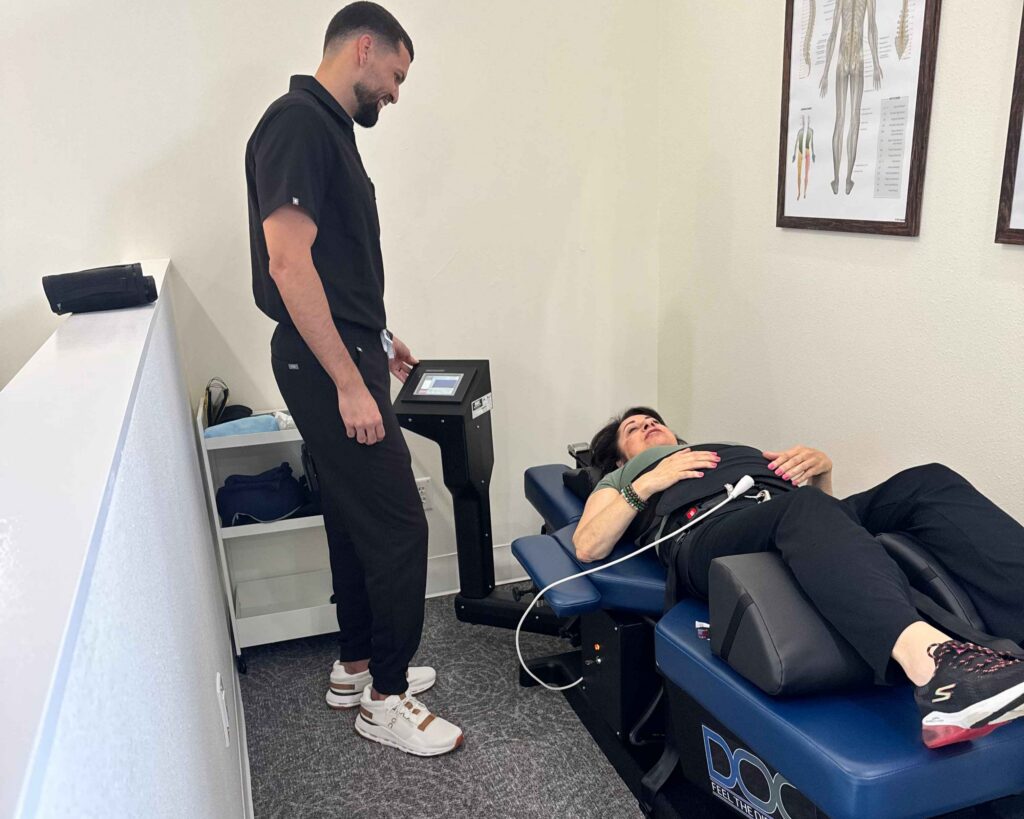
Disc-related pain requires careful assessment. Nonsurgical Spinal Decompression is a treatment option that helps gently stretch the spine. This helps to take pressure off of the discs and nerves in your neck and back. During a Spinal Decompression treatment, you’ll lay on a special motorized table. The top half of the table remains fixed while the bottom half of the table slowly moves and is controlled by an advanced computer system. While chiropractic care can be helpful for many disc conditions, we always ensure that your specific situation is appropriate for our care. Some disc problems may require co-management with other healthcare providers or, in rare cases, medical intervention.
Every patient at our Winter Garden practice receives individualized care. We don’t use a one-size-fits-all approach because your back pain is unique to you, your body, your lifestyle, and your health goals.
Practical Tips for Managing Back Pain at Home
While professional care is important, there’s plenty you can do at home to support your spine health and manage back pain between chiropractic visits.
Pay attention to your posture throughout the day. When sitting, keep both feet flat on the floor, sit back in your chair with your lower back supported, and position your computer screen at eye level. Set a timer to remind yourself to stand and move every 30 minutes. Prolonged sitting is one of the biggest contributors to back pain we see in our Winter Garden community.
Practice proper lifting techniques. Bend at your knees rather than your waist, keep the object close to your body, and avoid twisting while carrying something heavy. Even when lifting light objects, these principles matter because repetitive poor mechanics add up over time.
Stay active with gentle movement. Walking is excellent for most types of back pain because it promotes blood flow, maintains flexibility, and strengthens supporting muscles without excessive stress on your spine. Swimming and water aerobics are also gentle options that many of our patients find helpful.
Apply ice or heat appropriately. For acute injuries or inflammation, ice can help reduce swelling and numb pain during the first 48-72 hours. Use it for 15-20 minutes at a time with a barrier between the ice and your skin. After the acute phase, heat can relax tight muscles and increase blood flow to promote healing.
Create an ergonomic sleep environment. Your mattress should provide adequate support without being too firm or too soft. Side sleepers often benefit from placing a pillow between their knees to keep the spine aligned. Back sleepers can place a pillow under their knees to reduce lower back stress.
Maintain a healthy weight and stay hydrated. Excess weight increases the load on your spine, while proper hydration keeps your spinal discs healthy and resilient. Simple dietary improvements can make a meaningful difference in your overall spine health.
Manage stress through techniques like deep breathing, meditation, or gentle yoga. Psychological stress manifests physically, often as muscle tension in the back and neck. Finding healthy ways to process stress benefits both your mental and physical wellbeing.
When to See a Chiropractor
Knowing when to seek professional help is important for preventing minor back issues from becoming chronic problems. Consider scheduling an appointment at Vertebre Chiropractic Studio if your back pain lasts more than a few days without improvement, even if it’s mild.
If your pain is severe enough to interfere with daily activities like getting dressed, walking, or sleeping, it’s time to get evaluated. Pain that radiates down your arms or legs, especially if accompanied by numbness, tingling, or weakness, should be assessed promptly.
Recurring episodes of back pain, even if they resolve on their own, suggest an underlying issue that needs attention. Each episode can potentially cause additional damage and increase the likelihood of chronic problems developing.
You should also seek care if your back pain followed a specific injury, such as a fall, car accident, or lifting incident. Even if the pain seems minor initially, injuries can have delayed effects that benefit from early intervention.
Certain symptoms require immediate medical attention rather than chiropractic care. If you experience loss of bladder or bowel control, progressive leg weakness, fever with back pain, unexplained weight loss, or severe night pain that doesn’t improve with position changes, visit an emergency room or contact your primary care physician immediately. These red flags may indicate serious conditions that require medical intervention.
At our Winter Garden practice, we’re trained to recognize when your condition falls within our scope of practice and when you need medical referral. Your safety and wellbeing are always our top priorities.
Comparison of Back Pain Types
| Type of Back Pain | Common Location | Typical Symptoms | Common Triggers |
|---|---|---|---|
| Lower Back Pain | Lumbar region, may extend to buttocks/hips | Dull ache, stiffness, sharp pain with movement | Prolonged sitting, poor posture, heavy lifting, weak core muscles |
| Upper Back Pain | Between shoulder blades, mid-back | Burning sensation, muscle tightness, difficulty breathing deeply | Forward head posture, computer work, stress, rounded shoulders |
| Sciatica | Lower back radiating to leg(s) | Sharp shooting pain, numbness, tingling, weakness in leg | Disc herniation, spinal stenosis, piriformis muscle tightness |
| Muscle Strain | Localized to injured area | Sudden sharp pain, tenderness, muscle spasms | Improper lifting, sudden movements, overexertion, poor conditioning |
| Disc-Related Pain | Center of back, may radiate | Deep ache, worse with sitting/bending, may improve lying down | Age-related degeneration, trauma, repetitive stress, poor posture |
Myths vs. Facts About Back Pain
Myth: Bed Rest Is the Best Treatment for Back Pain
Fact: While rest may feel good initially, prolonged bed rest can actually make back pain worse. Research shows that staying as active as tolerable promotes faster recovery. Gentle movement helps maintain flexibility, prevents muscle weakness, and supports healing. At Vertebre Chiropractic Studio, we encourage appropriate activity levels based on your specific condition.
Myth: If You Have Back Pain, You Should Avoid Exercise
Fact: Exercise is one of the most effective ways to prevent and manage back pain. The key is choosing appropriate activities and progressing gradually. Low-impact exercises like walking, swimming, and specific therapeutic exercises can strengthen the muscles that support your spine and improve flexibility. We help our Winter Garden patients develop safe, effective exercise plans tailored to their needs and fitness levels.
Myth: Back Pain Always Shows Up on X-rays or MRIs
Fact: Many sources of back pain, including muscle strains, ligament sprains, and joint dysfunction, don’t show up on imaging. Additionally, imaging often reveals “abnormalities” in people with no pain at all. Studies indicate that disc bulges, degenerative changes, and other findings are common in pain-free individuals. Clinical examination and your symptom history are often more important than imaging for guiding care.
Myth: Cracking Your Own Back Is Just as Good as a Chiropractic Adjustment
Fact: Self-manipulation provides temporary relief at best and can potentially cause harm. The popping sound comes from gas release in the joint, but that doesn’t mean the joint has been properly adjusted. Chiropractors use specific techniques to restore motion to restricted joints while protecting hypermobile areas. Repeatedly cracking your own back can create instability and worsen underlying problems.
Myth: Once You Start Chiropractic Care, You Have to Go Forever
Fact: You’re always in control of your care decisions. Some patients choose ongoing wellness care because they feel better and want to maintain their results, but there’s no requirement to continue indefinitely. At Vertebre Chiropractic Studio, we develop care plans based on your goals and reassess regularly. Many patients complete a course of care and only return if symptoms recur or for periodic check-ups.
Final Thoughts
Understanding the different types of back pain and their causes is empowering. It helps you recognize patterns in your own body, make informed decisions about your health, and communicate more effectively with healthcare providers. Whether you’re dealing with nagging lower back discomfort, tension between your shoulder blades, radiating leg pain, muscle soreness, or disc-related issues, you don’t have to simply accept pain as part of life.
Here in Winter Garden, FL, we’re fortunate to have an active, outdoor-loving community. Don’t let back pain keep you from enjoying everything our beautiful area has to offer. At Vertebre Chiropractic Studio, we’re committed to helping you understand your body, address the root causes of your pain, and develop strategies for long-term spine health.
Remember that back pain is complex and individual. What works for one person may not work for another. That’s why personalized care, thorough assessment, and a collaborative approach to your health are so important. If you’re experiencing any type of back pain, we invite you to schedule a consultation so we can evaluate your specific situation and discuss whether chiropractic care might be right for you.
Your spine supports you through every activity, every day. Investing in its health is one of the best decisions you can make for your overall quality of life.
Frequently Asked Questions
How long does it typically take for back pain to improve with chiropractic care?
The timeline varies significantly based on the type and severity of your back pain, how long you’ve had it, and your overall health. Acute muscle strains may improve within a few visits, while chronic conditions often require several weeks of care. We’ll discuss realistic expectations during your initial consultation at Vertebre Chiropractic Studio.
Can chiropractic care help prevent future episodes of back pain?
Yes, research suggests that addressing underlying biomechanical issues, improving posture, strengthening core muscles, and maintaining proper spinal alignment can reduce the frequency and severity of future back pain episodes. Many patients find that periodic maintenance care helps them stay pain-free and active.
Is it normal for back pain to move around or change locations?
It can be normal for pain patterns to shift as your body compensates for dysfunction or as different structures become irritated. However, significant changes in pain location or character should be evaluated. This could indicate that the original problem is resolving, that a new issue has developed, or that compensation patterns are creating secondary problems.
What’s the difference between acute and chronic back pain?
Acute back pain lasts less than six weeks and often results from a specific injury or incident. Chronic back pain persists for three months or longer and may have multiple contributing factors. Chronic pain often requires a more comprehensive approach that addresses physical, lifestyle, and sometimes psychological factors.
Should I apply ice or heat to my back pain?
For new injuries with inflammation, ice is typically recommended for the first 48-72 hours to reduce swelling and numb pain. After the acute phase, heat can help relax tight muscles and increase blood flow. Some people find alternating between ice and heat helpful for chronic conditions.
Can stress really cause physical back pain?
Absolutely. Psychological stress triggers muscle tension, particularly in the neck, shoulders, and upper back. Chronic stress can also alter pain perception, lower pain thresholds, and contribute to inflammatory processes in the body. Addressing stress through relaxation techniques, exercise, and lifestyle changes is an important part of comprehensive back pain management.
TL;DR – Key Takeaways
- The five main types of back pain are lower back pain, upper back pain, sciatica, muscle strains, and disc-related pain, each with distinct causes and characteristics.
- Poor posture, prolonged sitting, improper lifting techniques, and weak core muscles are common contributors to multiple types of back pain.
- Chiropractic care offers a non-surgical, drug-free approach to addressing the underlying mechanical dysfunctions that cause back pain, with individualized treatment plans based on your specific condition.
- Staying active with appropriate exercise, practicing good ergonomics, and managing stress are essential for both treating and preventing back pain.
- Seek professional evaluation if your pain is severe, radiating, recurring, or accompanied by neurological symptoms, and always seek immediate medical care for red flag symptoms like loss of bladder control or progressive weakness.