


If you’ve ever felt a sharp, burning, or radiating pain shoot down from your lower back through your buttock and into your leg, you already know how disruptive sciatica can be. It doesn’t just hurt — it can make sitting at your desk, getting out of bed, or even standing in the kitchen feel like an impossible task. Here in Winter Garden, FL, many patients come through the doors of Vertebre Chiropractic Studio looking for real answers and lasting relief. The good news is that sciatica is one of the most common conditions chiropractors help address, and understanding what’s happening in your body is the first step toward feeling better.
What Is Sciatica?
Sciatica defined: Sciatica is not a condition on its own — it’s a symptom. It refers to pain, numbness, tingling, or weakness that travels along the path of the sciatic nerve, which runs from the lower back through the hips and buttocks and down each leg. Most commonly, sciatica affects only one side of the body and can range from a mild ache to a sharp, debilitating sensation.
What Causes Sciatica?
The sciatic nerve is the longest and widest nerve in the human body. When something compresses, irritates, or inflames it — or the nerve roots that form it in the lumbar spine — the result is that familiar, radiating pain known as sciatica. Understanding the root cause is essential, because treatment approaches can vary significantly depending on what’s driving your symptoms.
The most common culprit is a herniated or bulging disc in the lumbar spine. The discs in your spine act as cushions between the vertebrae. When one of these discs shifts out of place or develops a tear, its inner material can press directly against a nearby nerve root. This is especially common at the L4-L5 or L5-S1 levels — the very levels where the sciatic nerve originates.
Another frequent cause is lumbar spinal stenosis, which is a narrowing of the spinal canal that puts pressure on the nerves inside. This is more common in older adults and often produces symptoms that worsen with prolonged standing or walking. Piriformis syndrome is another possibility — here, the piriformis muscle in the buttock tightens or spasms and compresses the sciatic nerve as it passes through or beneath the muscle. Poor posture, prolonged sitting, pregnancy, and degenerative disc changes can also contribute to sciatic nerve irritation over time.
Signs and Symptoms to Watch For
Sciatica has a fairly recognizable pattern, though it can feel different from person to person. The hallmark sign is pain that starts in the lower back or buttock and radiates down the back of the leg — sometimes all the way to the foot. This pain can feel sharp, burning, electric, or like a deep ache. Some people describe it as a jolt that comes and goes, while others experience a constant, dull throb.
In addition to pain, you may notice numbness or tingling in the leg, calf, or foot. Some patients describe a “pins and needles” sensation, similar to when a limb falls asleep. Muscle weakness in the affected leg can also develop, which may cause issues with lifting the foot or maintaining balance. These symptoms typically affect only one side of the body, though bilateral sciatica does occur in some cases.
It’s worth noting that symptoms can flare up with certain movements or positions. Sitting for long periods — especially in low chairs or car seats — tends to aggravate sciatica. Bending forward, coughing, or sneezing may also intensify the pain. Conversely, lying down or changing positions may offer temporary relief. If you’re noticing any of these patterns here in Winter Garden, it may be time to have your spine evaluated by a professional.
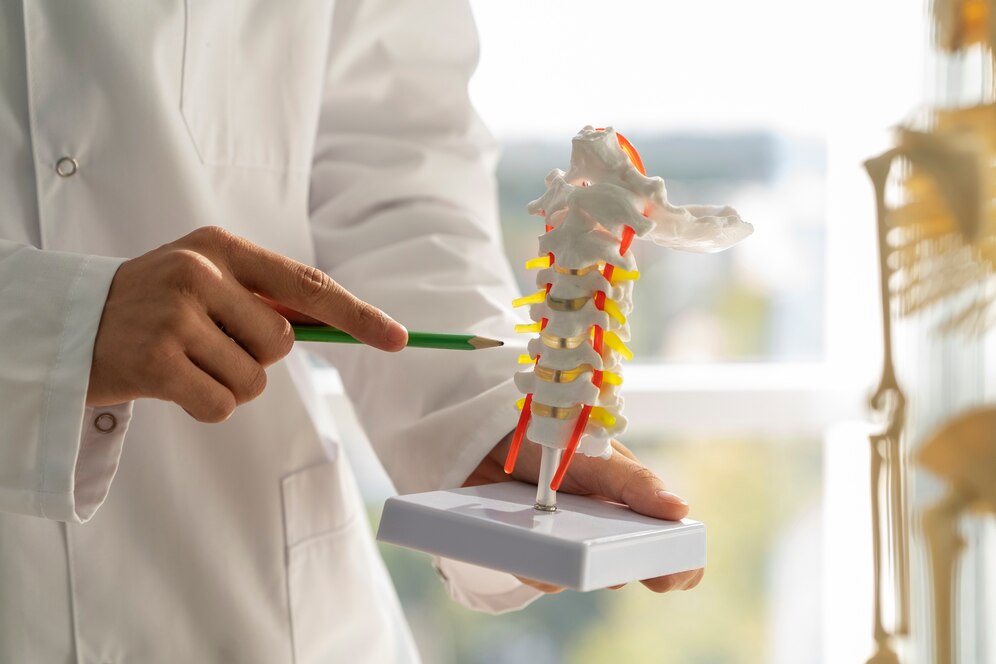
How Chiropractic Care Helps with Sciatica
Chiropractic care is widely recognized as a conservative, drug-free approach to managing musculoskeletal pain — and sciatica is one of its most well-established applications. The American College of Physicians (ACP) recommends non-pharmacological, conservative therapies as a first-line approach for back-related pain, and chiropractic care fits squarely within that framework. Evidence published in journals like Spine and reviewed through the Cochrane Library suggests that spinal manipulation can be effective in reducing pain and improving function for patients with lumbar disc-related conditions.
The central goal of chiropractic treatment for sciatica is to address the underlying biomechanical issues contributing to nerve compression or irritation. Rather than simply masking the pain, chiropractic care works to restore proper spinal alignment, reduce joint restrictions, and decrease inflammation around irritated nerve tissue. When the spine is moving properly and the surrounding muscles are functioning as they should, the sciatic nerve often has more room to function without interference.
Spinal adjustments are typically the cornerstone of chiropractic care for sciatica. A gentle, precise adjustment to the lumbar spine or sacroiliac joint can help reduce pressure on the affected nerve root, restore range of motion, and relieve muscle guarding that often develops around the painful area. Depending on your specific presentation, soft tissue work, therapeutic stretching guidance, and movement coaching may also be integrated into your care plan.
What to Expect at Vertebre Chiropractic Studio
At Vertebre Chiropractic Studio in Winter Garden, FL, Dr. Nandy Toro takes a thorough, patient-centered approach to evaluating and managing sciatica. Your first visit will involve a detailed consultation where Dr. Toro takes the time to listen — really listen — to your history, the nature of your symptoms, and how sciatica is affecting your daily life. Understanding your specific situation matters far more than applying a one-size-fits-all approach.
Following the consultation, Dr. Nandy Toro will conduct a physical and neurological examination. This typically includes evaluating your posture, assessing spinal range of motion, testing muscle strength and reflexes in the lower extremities, and performing specific orthopedic tests designed to identify the likely source of your nerve irritation. If imaging has already been done — such as an MRI or X-ray — that information can also be reviewed and factored into your care plan.
From there, Dr. Toro will walk you through findings and explain the recommended approach in clear, understandable language. Care plans at Vertebre Chiropractic Studio are individualized, realistic, and focused on helping you regain function and reduce pain as efficiently as possible. You won’t be rushed through the process, and you’ll always know what’s being done and why. That kind of transparency and genuine care is what the Winter Garden community has come to count on.
Practical Tips for Managing Sciatica at Home
While professional chiropractic care is an important part of recovery, what you do between appointments matters too. Managing sciatica effectively often requires a combination of in-office treatment and mindful daily habits. Here are some practical strategies that can support your healing process.
Staying gently active is generally more beneficial than complete rest. Prolonged bed rest has not been shown to speed recovery and may actually slow it. Short, gentle walks and movement throughout the day can help maintain circulation, reduce stiffness, and prevent the muscles around the spine from tightening further. If a specific movement causes sharp, worsening pain, stop and discuss it with Dr. Nandy Toro at your next visit.
Pay close attention to how you sit. Sitting with a forward-tilted pelvis in a well-supported chair — rather than slouching in a low, soft couch — tends to reduce pressure on the lumbar discs and nerve roots. If you work at a desk, make sure your feet are flat on the floor, your knees are at roughly hip height, and your lower back has adequate support. Avoid crossing your legs, which can tilt the pelvis and add stress to the piriformis and surrounding muscles.
Applying ice during the acute phase of a flare-up can help reduce local inflammation around the nerve. After the initial inflammatory period passes, gentle heat may ease muscle tension in the lower back and glutes. Always place a cloth between any heat or ice pack and your skin, and limit application to around 15-20 minutes at a time. If you’re unsure which is appropriate for your stage of recovery, it’s always a good idea to ask the team at Vertebre Chiropractic Studio.
When to See a Chiropractor for Sciatica
Many people wait far too long before seeking help for sciatica — often hoping it will resolve on its own. While some mild cases do improve with rest and time, sciatica that persists for more than a few weeks or continues to worsen warrants professional evaluation. The longer nerve irritation goes unaddressed, the more the surrounding muscles may compensate and develop secondary dysfunction, making recovery more complex.
You should schedule an evaluation with Dr. Nandy Toro at Vertebre Chiropractic Studio if your lower back and leg pain has been present for two or more weeks, if over-the-counter pain relievers are no longer providing adequate relief, or if the pain is significantly disrupting your sleep, work, or daily activities. Sciatica that responds poorly to self-care is often related to underlying spinal joint restrictions or disc changes that respond well to chiropractic treatment.
However, there are certain red flag symptoms that require immediate medical attention rather than a chiropractic visit. These include sudden loss of bladder or bowel control, progressive weakness in both legs, or numbness in the inner thighs and groin area (sometimes called “saddle anesthesia”). These may indicate a serious neurological emergency called cauda equina syndrome and should be evaluated in an emergency setting without delay. Dr. Toro is trained to recognize these warning signs and will refer appropriately whenever the situation calls for it.

Treatment Approach Comparison
|
Approach |
Mechanism |
Typical Use |
Potential Drawbacks |
|---|---|---|---|
|
Chiropractic Care |
Spinal adjustments to reduce nerve compression and restore mobility |
Conservative first-line care for most sciatica cases |
Requires multiple visits; not suitable for all disc conditions |
|
Pain Medication (OTC/Rx) |
Blocks pain signals or reduces inflammation chemically |
Short-term symptom relief |
Does not address root cause; potential for side effects or dependency |
|
Physical Therapy |
Strengthening and flexibility exercises to support spinal stability |
Often used alongside or after acute care |
Requires patient effort and consistency; less effective alone for joint dysfunction |
|
Epidural Steroid Injections |
Anti-inflammatory medication injected near the nerve root |
Moderate-to-severe pain unresponsive to conservative care |
Temporary relief; possible side effects; does not fix structural issues |
|
Surgery |
Removes or repairs tissue compressing the nerve |
Reserved for severe, unresponsive cases with neurological compromise |
Invasive; recovery time; not always necessary |
Myths vs. Facts About Sciatica
Myth: Sciatica always requires surgery to resolve.
Fact: The vast majority of sciatica cases resolve with conservative, non-surgical care. Research suggests that chiropractic treatment, physical therapy, and guided movement are effective for most patients. Surgery is typically considered only when conservative approaches have been exhausted and significant neurological deficits are present.
Myth: You should rest completely until the pain goes away.
Fact: Prolonged bed rest is not recommended for sciatica and can actually delay recovery. Gentle movement, walking, and guided activity help reduce stiffness, maintain circulation, and support healing. Total inactivity can cause muscles to weaken and joints to stiffen further.
Myth: Sciatica is just “a bad back.”
Fact: Sciatica is a specific nerve-related condition involving compression or irritation of the sciatic nerve. While it often begins with a spinal issue, its effects — radiating leg pain, numbness, and weakness — go well beyond typical back pain. Treating it requires an approach that addresses the nerve and its underlying cause, not just the back muscles.
Myth: Chiropractic adjustments are dangerous for sciatica.
Fact: When properly evaluated and treated by a licensed chiropractor, spinal adjustments are considered a safe, non-invasive option for most patients with sciatica. Dr. Nandy Toro performs a thorough assessment before any treatment to ensure that the approach is appropriate and safe for each individual patient’s condition.
Myth: Once you have sciatica, it will always come back.
Fact: While sciatica can recur — especially without addressing contributing lifestyle and postural factors — many people experience long-term relief with proper care. Maintaining good spinal health through regular movement, ergonomic awareness, and periodic chiropractic check-ins can significantly reduce the likelihood of future flare-ups.
Final Thoughts from Vertebre Chiropractic Studio
Living with sciatica can feel overwhelming, but it doesn’t have to define your day-to-day life. With the right support and a clear plan, most people experience meaningful improvement — often more quickly than they expected. The key is addressing the problem at its source rather than simply covering up the pain.
Here at Vertebre Chiropractic Studio in Winter Garden, FL, Dr. Nandy Toro is committed to helping members of our community understand what’s happening in their bodies and what they can do about it. Whether you’re in the middle of a painful flare-up or dealing with chronic, nagging sciatic discomfort, a thorough evaluation is the best place to start. You deserve care that respects your time, treats you as an individual, and gives you real, honest information every step of the way.
If you’ve been searching for sciatica relief near Winter Garden or the greater Orange County area, Vertebre Chiropractic Studio is here to help. Take that first step — because feeling better is absolutely possible.
Frequently Asked Questions About Sciatica and Chiropractic Care
How many chiropractic visits does it take to see improvement with sciatica?
This varies depending on the underlying cause, how long the condition has been present, and each patient’s overall health. Some patients notice improvement within a few visits, while more chronic or complex cases may take several weeks of consistent care. Dr. Nandy Toro will give you a realistic timeline based on your specific findings during the initial evaluation.
Is chiropractic care safe if I have a herniated disc causing my sciatica?
In many cases, yes — chiropractic care can be a safe and effective option for herniated disc-related sciatica. A proper examination and review of any imaging will help determine the most appropriate technique and level of force. Dr. Toro tailors every treatment approach to the individual, and gentler techniques are available when standard adjustments are not appropriate.
Can sciatica go away on its own without treatment?
Mild cases of sciatica sometimes resolve on their own within a few weeks. However, if symptoms persist beyond four to six weeks, worsen over time, or significantly affect your quality of life, seeking professional evaluation is strongly recommended. Unaddressed sciatica can lead to compensatory movement patterns and secondary muscle dysfunction that complicate recovery.
What’s the difference between sciatica and general lower back pain?
General lower back pain is typically localized to the lumbar region and does not radiate significantly down the leg. Sciatica, by contrast, involves the sciatic nerve and produces symptoms — pain, tingling, numbness, or weakness — that travel down the buttock, thigh, and leg. The distinction matters because the treatment approach differs between the two conditions.
Should I apply heat or ice to sciatica pain?
Ice is generally recommended during the early, acute phase of a sciatica flare to help reduce inflammation around the irritated nerve. Heat can be helpful for relaxing tight muscles in the lower back and buttock area once the acute phase has passed. It’s always a good idea to consult with your chiropractor to determine what’s most appropriate for your current stage of healing.
Does sitting make sciatica worse?
For many people, prolonged sitting — especially in low or unsupported seats — does aggravate sciatica. Sitting increases pressure on the lumbar discs and can compress the sciatic nerve further, particularly if posture is poor. Taking regular breaks to stand and move, and optimizing your seated posture, can make a meaningful difference in how you feel throughout the day.
TL;DR Summary
-
Sciatica is pain caused by compression or irritation of the sciatic nerve, often stemming from a herniated disc, spinal stenosis, or piriformis muscle tightness.
-
Symptoms include radiating pain, numbness, tingling, and sometimes weakness running from the lower back down the leg.
-
Chiropractic care — including spinal adjustments — is a well-supported, conservative, drug-free approach to managing sciatica by addressing the underlying spinal cause.
-
At Vertebre Chiropractic Studio in Winter Garden, FL, Dr. Nandy Toro provides individualized evaluations and tailored treatment plans to help patients recover efficiently and safely.
-
Most sciatica cases improve with conservative care; surgery is rarely needed, and staying gently active while seeking professional guidance gives you the best chance at lasting relief.