
If you’ve ever spent hours in an intense gaming session only to stand up feeling like you’ve aged 30 years, you’re not alone. Gaming has evolved from a casual hobby into a legitimate competitive sport and full-time career for many, but it comes with physical demands that many players don’t realize until pain sets itself in. The hunched shoulders, the clicking wrists, the stiff neck that won’t turn properly—these aren’t just minor annoyances. They’re your body sending warning signals that something needs attention. Here in Winter Garden, FL, we’ve seen a growing number of gamers at Vertebre Chiropractic Studio who are dealing with musculoskeletal issues that directly impact their performance and quality of life. The good news? Chiropractic care offers practical, drug-free solutions that can help you level up both in-game and in how your body feels.
What Are the Physical Effects of Gaming on the Body?
Extended gaming sessions place repetitive stress on your spine, neck, wrists, and shoulders. Poor posture, static positioning, and repetitive movements create biomechanical imbalances that lead to pain, reduced mobility, and decreased reaction times—all of which can affect gaming performance and daily comfort.
Table of Contents
- Understanding “Gamer Body” and Why It Matters
- Common Conditions Affecting Gamers
- The Biomechanics of Gaming Posture
- How Chiropractic Care Supports Gamers
- Practical Tips for Gaming Wellness
- When to See a Chiropractor
- Gaming Setup Comparison
- Myths vs. Facts About Gaming and Spinal Health
- Final Thoughts
- Frequently Asked Questions
- TL;DR Summary
Understanding “Gamer Body” and Why It Matters
The term “gamer body” might sound lighthearted, but it describes a very real collection of physical adaptations and problems that develop from prolonged gaming. When you sit in a forward-leaning position for hours at a time, your body begins to adapt to that posture. Your chest muscles tighten and shorten. Your upper back muscles stretch and weaken. Your neck juts forward to keep your eyes on the screen. Over weeks, months, and years, these adaptations become your new “normal” posture—except it’s anything but normal for optimal function.
Your spine is designed for movement and varied positioning throughout the day. When you lock it into one position for extended periods, several things happen simultaneously. The intervertebral discs that cushion your vertebrae don’t receive proper nutrient exchange, which happens through movement. The facet joints in your spine become restricted in certain directions while developing excessive motion in others. Surrounding muscles develop imbalances, with some becoming overactive and tight while others become inhibited and weak.
Here at Vertebre Chiropractic Studio in Winter Garden, we’ve observed that many gamers don’t connect their physical symptoms with their gaming habits until the discomfort becomes significant. That shoulder tension you feel after a raid? The headaches that show up during competitive matches? The lower back pain that hits when you finally stand up? These are all connected to how gaming affects your musculoskeletal system.
What makes this particularly important for gamers is that physical discomfort directly impacts performance. Research indicates that pain and restricted mobility can slow reaction times, reduce precision, and decrease overall cognitive function. When your body is fighting against poor posture and musculoskeletal dysfunction, you’re not operating at peak performance—in-game or in life.
Common Conditions Affecting Gamers
Several specific conditions tend to develop in gamers due to the repetitive nature of gaming activities and the sustained postures involved. Understanding these conditions helps you recognize warning signs early.
Upper Crossed Syndrome
This postural pattern is perhaps the most common issue we see in gamers at our Winter Garden practice. Upper crossed syndrome involves tight chest muscles and weak upper back muscles, combined with tight muscles at the base of the skull and weak deep neck flexors. The result is that characteristic forward head posture where your head juts forward from your shoulders. For every inch your head moves forward from its ideal position, it adds approximately 10 pounds of extra stress on your neck and upper back muscles. If you’re gaming with your head three inches forward, that’s an extra 30 pounds of stress your neck is managing throughout your session.
Carpal Tunnel Syndrome and Wrist Issues
The repetitive clicking, fast-paced keyboard work, and specific grip patterns required for controllers and mice can lead to median nerve compression at the wrist. This creates numbness, tingling, weakness, and pain in the hand and fingers. Many gamers also develop tendinitis in the wrist extensors and flexors from the constant, rapid movements required during gameplay.
Thoracic Outlet Syndrome
When you maintain that forward shoulder position common in gaming posture, the space between your collarbone and first rib narrows. This can compress the nerves and blood vessels that travel through this area to supply your arm and hand. Symptoms include numbness and tingling in the arms and hands, cold hands, and arm fatigue. Many gamers mistake this for carpal tunnel syndrome because the symptoms can feel similar.
Cervicogenic Headaches
These headaches originate from dysfunction in the cervical spine—your neck. The sustained forward head posture and lack of neck movement during gaming creates tension and restricted joint motion in the upper cervical vertebrae. This can trigger headaches that typically start at the base of the skull and radiate forward toward the eyes and forehead.
Lower Back Pain and Disc Stress
Even though gaming feels like it’s all about the upper body, your lower back takes significant stress from prolonged sitting. The lumbar spine loses its natural curve when you sit in typical gaming postures, placing increased pressure on the intervertebral discs. Over time, this can contribute to disc degeneration, bulging, and chronic lower back pain.
The Biomechanics of Gaming Posture
To understand why gaming creates these problems, it helps to understand what’s actually happening to your body biomechanically. Your head weighs approximately 10-12 pounds when positioned directly over your shoulders. In this neutral position, your neck muscles work efficiently to support it. However, gaming typically requires visual focus on a screen, which naturally draws your head forward and tilts it slightly up or down depending on monitor height.
As your head moves forward, the weight your neck must support increases exponentially due to leverage. Your neck muscles, particularly the upper trapezius, levator scapulae, and suboccipital muscles, must work harder to prevent your head from falling completely forward. These muscles aren’t designed for this sustained contraction. They fatigue, develop trigger points, and eventually create pain patterns that can radiate into your shoulders, between your shoulder blades, and up into your head.
Your shoulder position compounds this issue. When focused on gaming, most players protract their shoulders forward—meaning they round forward from the body. This position shortens the pectoral muscles in your chest and lengthens the rhomboids and middle trapezius muscles in your upper back. Over time, these muscles adapt to these new lengths. Your chest gets tighter, your upper back gets weaker, and returning to proper posture becomes increasingly difficult even when you’re not gaming.
The wrist and hand position during gaming creates its own biomechanical challenges. Mouse work typically involves maintaining the wrist in extension—bent upward—while performing fine motor control movements. This position places the extensor tendons on stretch and can compress the median nerve as it travels through the carpal tunnel. Keyboard work often involves ulnar deviation, where the wrists angle outward toward the pinky fingers, which places additional stress on the wrist joints and surrounding soft tissues.
Your lower spine suffers from the seated position itself. When sitting, the pelvis rotates backward, which flattens or even reverses the natural lumbar curve. This places the intervertebral discs under asymmetric load, with increased pressure on the front portion of the disc. The supporting ligaments of the spine stretch into their end range, and the back muscles must work to stabilize the spine in this mechanically disadvantaged position.
How Chiropractic Care Supports Gamers
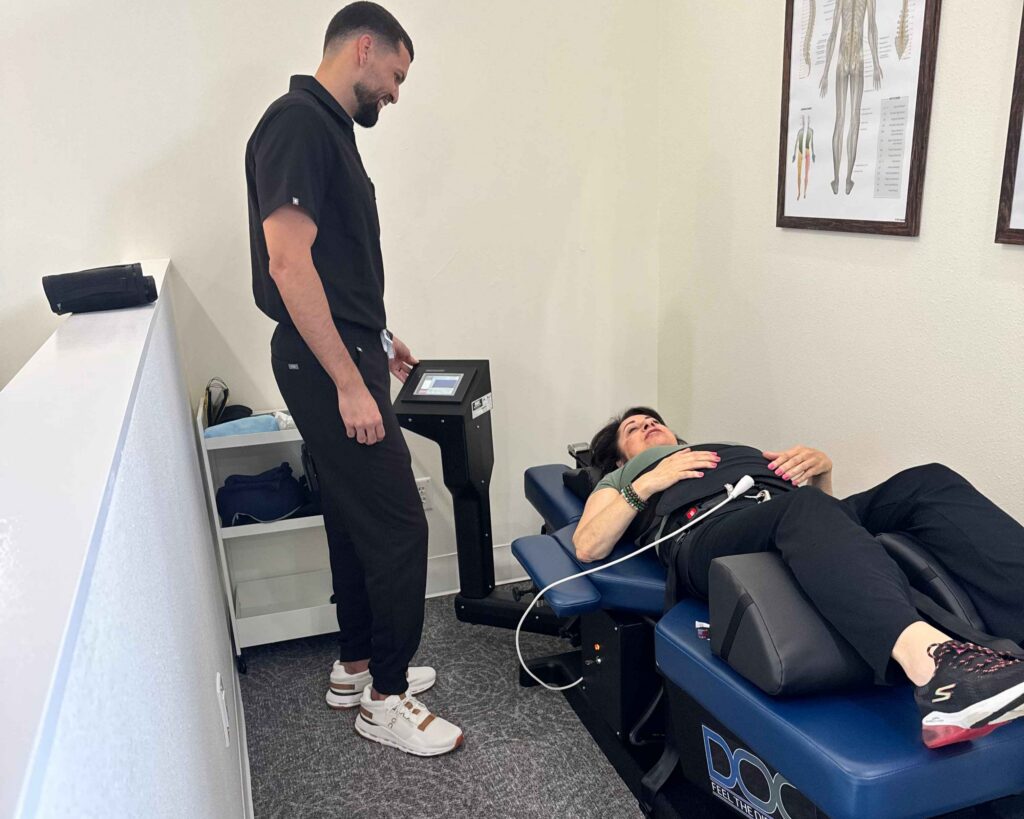
Chiropractic care offers gamers a practical, non-invasive approach to addressing the musculoskeletal issues that develop from extended gaming sessions. At Vertebre Chiropractic Studio in Winter Garden, we approach gaming-related problems with a comprehensive understanding of how repetitive stress and sustained postures create dysfunction throughout the kinetic chain.
The foundation of chiropractic care involves spinal adjustments that restore proper joint motion and alignment. When vertebrae become restricted in their movement—which commonly occurs with sustained gaming postures—chiropractic adjustments help restore that mobility. This improved motion helps reduce pain, decreases muscle tension, and supports better overall spinal function. For gamers, this often translates to reduced neck and back pain, improved comfort during gaming sessions, and better posture naturally.
Beyond spinal adjustments, chiropractic care for gamers often includes extremity adjustments, particularly for the wrists, elbows, and shoulders. These joints experience repetitive stress from gaming activities, and maintaining proper joint mechanics helps reduce the risk of developing conditions like carpal tunnel syndrome and tendinitis. Adjustments to these areas can improve mobility, reduce inflammation, and support better biomechanics during gaming.
Soft tissue work is another important component of chiropractic care for gamers. Techniques like instrument-assisted soft tissue mobilization, myofascial release, and trigger point therapy help address the muscle imbalances and tension patterns that develop from gaming. These approaches can help lengthen shortened chest muscles, release tight neck and shoulder muscles, and improve tissue quality in overworked forearm muscles.
Evidence suggests that chiropractic care can be effective for managing neck pain, with multiple systematic reviews indicating benefits for cervicogenic conditions. For issues like carpal tunnel syndrome, conservative care approaches including joint mobilization and soft tissue work have shown promise as initial management strategies before considering more invasive options.
At our Winter Garden practice, we also emphasize rehabilitation exercises and postural training. Simply adjusting someone’s spine and releasing tight muscles provides temporary relief, but lasting change requires addressing the underlying movement patterns and postural habits. We provide gamers with specific exercises to strengthen weak postural muscles, stretch tight areas, and develop better body awareness during gaming sessions.
What sets chiropractic care apart for gamers is the individualized approach. We assess your specific gaming setup, your particular postural patterns, and the unique ways your body has adapted to your gaming habits. Treatment plans are customized to address your specific needs, whether that’s primarily upper cervical issues, wrist and forearm problems, or a combination of factors affecting multiple areas.
Practical Tips for Gaming Wellness
While professional chiropractic care provides important treatment and correction of existing problems, there are several practical strategies gamers can implement to reduce stress on the body and prevent issues from developing or worsening.
Optimize Your Gaming Setup
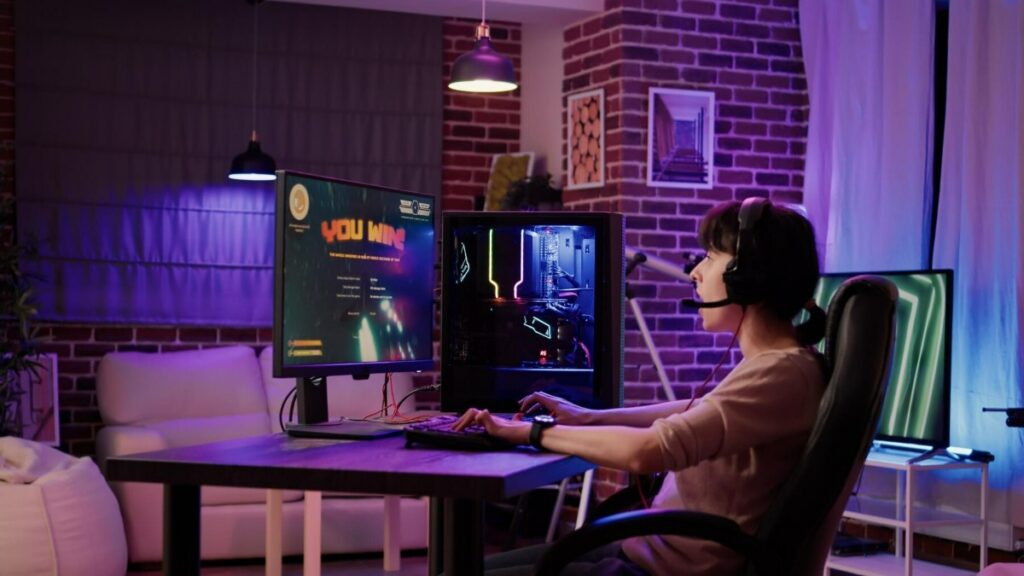
Your monitor should be positioned so the top third of the screen sits at or slightly below eye level when you’re sitting with proper posture. This positioning prevents you from having to tilt your head up or down significantly. The monitor should be approximately an arm’s length away—close enough to see clearly without straining, but far enough that you’re not craning your neck forward to view it. Position it directly in front of you rather than off to one side to avoid sustained rotation of your neck.
Your chair height should allow your feet to rest flat on the floor with your knees at approximately 90 degrees. Your hips should be slightly higher than your knees. The chair should have good lumbar support—use a small cushion or rolled towel if needed to maintain the natural curve in your lower back. Armrests should support your forearms lightly without causing your shoulders to shrug upward.
Implement Movement Breaks
Set a timer for every 30-45 minutes during gaming sessions. When it goes off, stand up and move for at least 2-3 minutes. Walk around, do some gentle stretches, or perform some simple movements. This regular interruption of sustained posture is crucial for spinal health. Your intervertebral discs need movement to receive nutrients and eliminate waste products. Your muscles need varied positioning to avoid fatigue and imbalance development.
Practice Posture Checks
During loading screens or natural breaks in gameplay, perform a quick posture check. Bring your shoulder blades back and down. Tuck your chin slightly to bring your head back over your shoulders. Take a few deep breaths, expanding your rib cage in all directions. These micro-corrections help prevent you from sinking deeper into poor posture as your session progresses.
Wrist and Hand Care
Your keyboard should be positioned so your wrists remain in neutral alignment—not bent up, down, or to the side. Consider using a wrist rest, but use it as a rest between actions rather than constantly leaning on it during gameplay. Your mouse should fit your hand size and grip style. Experiment with different mouse sizes and shapes if you’re experiencing hand or wrist discomfort. Take micro-breaks during gameplay to open and close your hands fully, spreading your fingers wide several times.
Strengthen Postural Muscles
Incorporate simple exercises into your daily routine that counter gaming posture. Rows with resistance bands strengthen your upper back muscles. Wall angels help improve shoulder blade mobility and strength. Chin tucks strengthen the deep neck flexors that support proper head position. Bridges strengthen your glutes and lower back. Even 10 minutes daily of targeted exercises can significantly impact how your body handles gaming stress.
Hydration and Nutrition
Proper hydration supports disc health and tissue healing. Keep water nearby during gaming sessions and sip regularly. Adequate protein intake supports muscle recovery and adaptation. Anti-inflammatory foods like fatty fish, berries, and leafy greens support overall musculoskeletal health, while excessive processed foods and sugar can increase inflammation.
When to See a Chiropractor
Many gamers wonder when their discomfort has crossed the line from normal fatigue into something that warrants professional attention. Here at Vertebre Chiropractic Studio in Winter Garden, we encourage gamers to seek evaluation sooner rather than later, as early intervention typically leads to faster resolution and prevents chronic problems from developing.
Consider scheduling a chiropractic evaluation if you experience neck or back pain that persists beyond your gaming session—particularly if it’s present the next morning or affects your daily activities. Pain that interferes with sleep or requires over-the-counter pain medication regularly is a clear signal that professional assessment is appropriate.
Headaches that occur during or after gaming sessions, especially if they’re increasing in frequency or intensity, warrant evaluation. Cervicogenic headaches respond well to chiropractic care but can become chronic if left unaddressed. Similarly, if you notice your gaming performance declining due to physical discomfort—slower reaction times, reduced precision, or difficulty maintaining focus due to pain—it’s time to seek care.
Numbness, tingling, or weakness in your hands, arms, or fingers should never be ignored. These symptoms suggest nerve involvement, whether from carpal tunnel syndrome, thoracic outlet syndrome, or cervical nerve compression. Early conservative care can often prevent these conditions from progressing to the point where more invasive interventions become necessary.
Postural changes that you notice in the mirror or that others point out—such as rounded shoulders, forward head position, or asymmetries in how you carry yourself—indicate that adaptive changes are occurring in your musculoskeletal system. Addressing these before they become fully established is much easier than trying to correct long-standing postural patterns.
Difficulty moving your neck or back through full range of motion, or pain with certain movements, suggests joint restriction or dysfunction that chiropractic care can address. If you find yourself unable to turn your head fully to check your blind spot while driving, or if getting up from your gaming chair requires you to move slowly and carefully, these are clear indicators that your body needs attention.
However, certain symptoms require immediate medical attention rather than chiropractic care. Sudden onset of severe headache, especially if accompanied by visual changes, confusion, or difficulty speaking, requires emergency evaluation. Progressive weakness, loss of bowel or bladder control, or numbness in the saddle region are red flags that need immediate medical assessment. Chest pain, shortness of breath, or dizziness should never be attributed to gaming posture without ruling out more serious conditions first.
Gaming Setup Comparison
| Setup Element | Poor Ergonomics | Optimal Ergonomics |
|---|---|---|
| Monitor Position | Too low (looking down), too high (looking up), or off to the side requiring neck rotation | Top third of screen at eye level, directly in front, arm’s length away |
| Chair Height | Feet dangling, knees higher than hips, or slouched into seat with no back support | Feet flat on floor, knees at 90 degrees, hips slightly higher than knees, lumbar support present |
| Keyboard/Mouse | Wrists bent up or to sides, shoulders shrugged, arms unsupported, reaching too far forward | Wrists neutral, forearms supported, shoulders relaxed, keyboard and mouse within easy reach |
| Gaming Duration | Multiple hours without breaks, gaming until pain forces stopping | Movement breaks every 30-45 minutes, postural checks during loading screens |
| Lighting | Screen too bright, no ambient lighting, glare on screen causing squinting and forward lean | Screen brightness matched to room, adequate ambient lighting, no glare causing postural compensation |
Myths vs. Facts About Gaming and Spinal Health
Myth: Gaming-Related Pain Is Just Part of Being a Serious Gamer
Fact: While gaming does place physical demands on your body, pain is not an inevitable consequence. Pain is your body’s warning signal that something needs to change—whether that’s your setup, your habits, or seeking professional care. Professional esports athletes work with healthcare providers to optimize their physical condition, just as traditional athletes do. Pain should prompt action, not acceptance.
Myth: You Have to Stop Gaming to Fix Gaming-Related Problems
Fact: Most gaming-related musculoskeletal issues can be addressed while you continue gaming. The goal is to modify how you game, optimize your setup, incorporate preventive strategies, and receive appropriate care—not to eliminate the activity entirely. Many gamers at Vertebre Chiropractic Studio in Winter Garden continue their gaming activities while working through treatment and making necessary adjustments to their habits and environment.
Myth: Chiropractic Adjustments Are Dangerous for Young Gamers
Fact: Chiropractic care is safe for all ages when provided by a licensed chiropractor. Adjustments are modified based on age, size, and specific needs. The techniques used for younger patients are typically gentler and lower force than those used for adults. Research indicates that chiropractic care has an excellent safety profile across all age groups.
Myth: If You Use an “Ergonomic” Setup, You Won’t Develop Problems
Fact: While proper ergonomics significantly reduces risk, even optimal positioning can create issues if maintained for too long without movement. Your body is designed for varied movement and position changes throughout the day. The most ergonomic setup in the world doesn’t eliminate the need for regular movement breaks and postural variation.
Myth: Stretching Before Gaming Prevents All Problems
Fact: While stretching can be beneficial, it’s not a complete solution. Gaming-related problems develop from sustained postures and repetitive movements over time, not just muscle tightness. Effective prevention requires a combination of proper setup, movement breaks, strengthening weak muscles, addressing existing restrictions, and maintaining overall physical fitness. Stretching is one piece of a larger puzzle.
Final Thoughts
Gaming doesn’t have to come with the cost of chronic pain and reduced mobility. Whether you’re a competitive esports player, a casual weekend gamer, or someone who’s built a career in the gaming industry, your physical health directly impacts both your performance and your quality of life. The musculoskeletal issues that develop from gaming are real, but they’re also addressable with the right approach.
Here in Winter Garden, FL, we understand that gaming is more than just a hobby for many people—it’s a passion, a career, or an important part of how you connect with friends and unwind from daily stress. At Vertebre Chiropractic Studio, we’re committed to helping gamers perform at their best both in-game and in life. We’ve seen firsthand how addressing spinal health, improving posture, and implementing smart gaming habits can transform not just how someone feels, but how they perform.
Your body is your most important piece of gaming equipment. It deserves the same attention and optimization you give to your PC build, your internet connection, or your gaming peripherals. If you’re dealing with pain, stiffness, or declining performance related to gaming, know that help is available. Conservative, drug-free chiropractic care offers a practical path forward that addresses the root causes of gaming-related problems rather than just masking symptoms.
Remember, you don’t have to wait until pain becomes severe to seek care. Early intervention typically leads to faster results and prevents minor issues from becoming chronic problems. Whether you’re ready to schedule an appointment or just want to learn more about how chiropractic care can support your gaming lifestyle, we’re here in Winter Garden to help you go from stiff to swift.
Frequently Asked Questions
How long does it take to see improvement in gaming-related pain with chiropractic care?
Most patients notice some improvement within the first 2-3 weeks of care, though this varies based on how long the problem has been present and its severity. Acute issues that have developed recently typically respond faster than chronic conditions that have been present for months or years. Consistent care combined with implementing ergonomic changes and exercises usually produces the best outcomes.
Can chiropractic care improve my gaming performance?
While we can’t promise specific performance gains, many gamers report improved reaction times, better focus, and enhanced endurance during gaming sessions after addressing musculoskeletal issues. Pain and discomfort are distracting and can slow reflexes, so reducing these physical issues often allows gamers to perform closer to their true potential.
Will I need ongoing chiropractic care or is it just temporary treatment?
Initial treatment focuses on addressing acute problems and correcting dysfunction. Once issues are resolved, many gamers benefit from periodic maintenance visits to prevent problems from redeveloping, especially if they continue gaming regularly. Think of it like maintaining your gaming setup—regular check-ups can prevent major issues from developing.
Is it better to see a chiropractor before or after pain starts?
Ideally, proactive care before significant pain develops allows us to identify and address minor restrictions and imbalances before they become major problems. However, many people seek care once pain is already present, which is also appropriate. Either way, chiropractic care can be beneficial—prevention is ideal, but treatment is always available when needed.
What’s the difference between gaming-related pain and serious injury?
Gaming-related musculoskeletal pain typically develops gradually, improves with rest, and is related to positioning and duration of gaming. Serious injury or conditions requiring medical referral usually involve sudden onset, progressive worsening despite rest, neurological symptoms like significant weakness or numbness, or symptoms that don’t fit typical musculoskeletal patterns. When in doubt, seeking professional evaluation helps determine the appropriate course of action.
Do professional gamers use chiropractic care?
Yes, many professional esports organizations now include healthcare providers, including chiropractors, as part of their support teams. As esports has matured as an industry, there’s growing recognition that physical health directly impacts performance and career longevity, just as it does in traditional sports.
TL;DR Summary
- Gaming creates real musculoskeletal stress through sustained poor postures and repetitive movements, leading to conditions like forward head posture, upper crossed syndrome, carpal tunnel issues, and chronic neck and back pain that can affect both gaming performance and daily life.
- Chiropractic care offers gamers drug-free, non-invasive treatment through spinal adjustments, extremity adjustments, soft tissue work, and rehabilitation exercises that address the root causes of gaming-related pain while supporting better posture and function.
- Optimal gaming ergonomics matter but aren’t sufficient alone—regular movement breaks every 30-45 minutes, postural awareness, and targeted strengthening exercises are essential for preventing problems even with perfect setup.
- Seek chiropractic evaluation early when you notice persistent pain, declining performance due to discomfort, numbness or tingling, postural changes, or reduced mobility rather than waiting for symptoms to become severe.
- At Vertebre Chiropractic Studio in Winter Garden, FL, we provide individualized care that addresses your specific gaming-related issues while helping you implement practical strategies to game comfortably and perform at your best.